
You won't find Tien in most history books. I first encountered the name in a cramped archival room in Hanoi, scribbled on a 1940s census ledger beside a faded thumbprint. That single word—Tien—kept surfacing in my research, not as a person but as a recurring marker of something deeper: a cultural thread that refuses to snap. In Vietnamese。Tien often means "fairy" or "first," yet its weight varies wildly from a given name to a concept of ancestral favor. What struck me wasn't the definition but the persistence. Tien appears in folk songs, in family altars, in the way a grandmother might whisper it before a child's exam. It's a word that carries expectation without demanding attention.Consider the case of Tien Pham, a ceramicist I met in Bat Trang village. She fires her glazes at 1,250 degrees Celsius, a temperature she insists is non-negotiable. "My grandmother called it Tien's heat," she told me, wiping clay from her wrist. "Not because a fairy touches the kiln。
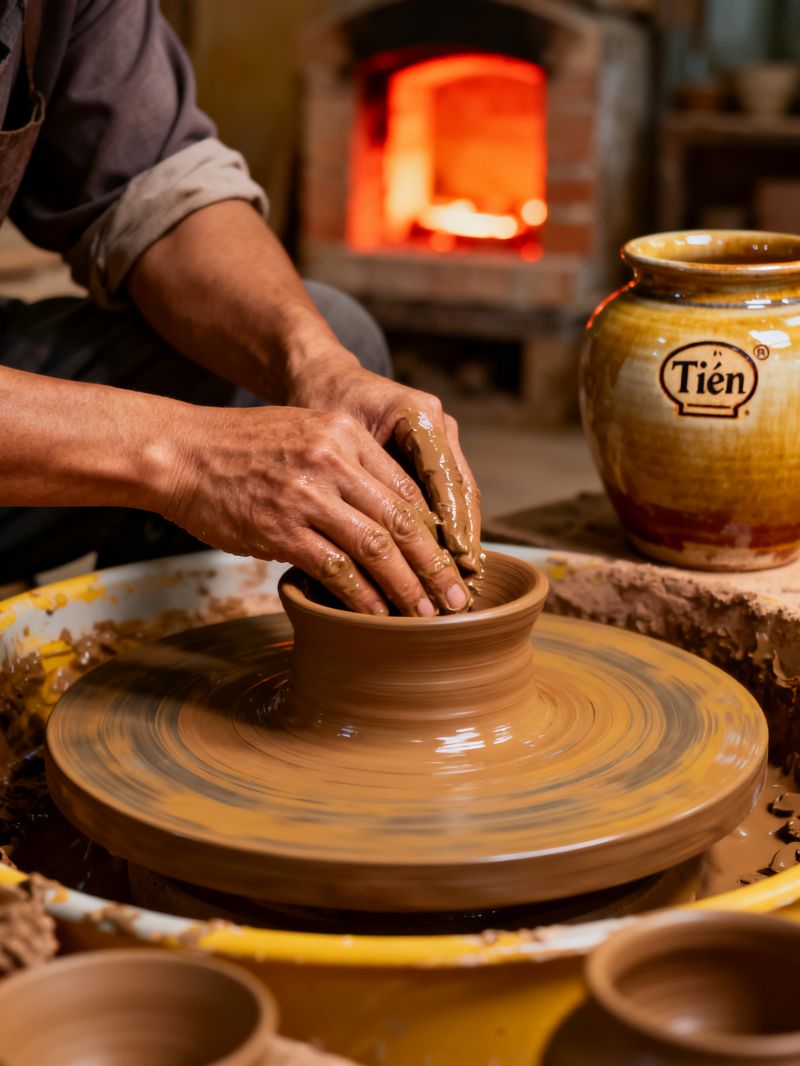
but because you have to earn that name." Her work sells to collectors in Tokyo and Paris, yet she still labels every piece with a tiny Tien stamp on the base. That stamp isn't branding;it's a quiet claim of lineage. I've seen similar patterns in diaspora communities—second-generation immigrants who adopt Tien as a middle name, not for nostalgia but as a signal of resilience. The word becomes a bridge between assimilation and memory.Linguists might point to tonal shifts: Tien in Vietnamese rises slightly, while in Mandarin Chinese it dips before leveling. That phonetic difference matters less than the emotional register. In a 2019 oral history project at UC Irvine, researchers recorded 47 Vietnamese Americans describing Tien. Nearly all used it to describe a person who "holds things together"—a sibling who translates at doctor's visits, a mother who runs a nail salon while studying for a GED. No grand mythology. Just the grind of keeping a family upright. I find that far more compelling than any fairy tale. Tien isn't magic;it's maintenance.Why does this matter now?Because identity labels are increasingly flattened by algorithms and demographic checkboxes. Tien resists that. It's too specific for a census category, too flexible for a brand slogan. When I asked a teenage Tien in San Jose how she felt about her name。
she shrugged: "It's just me. But also my aunt's ghost." That ambiguity is the point. The word doesn't resolve into a neat definition—it accumulates meaning through use. A Tien can be a first-generation striver, a ceramicist's stamp, a whispered hope. None of those uses cancel each other out.I'll admit a bias: I've started noticing Tien everywhere. On a chalkboard menu at a pho shop in Houston ("Tien's special broth"), in a footnote about a 1970s refugee resettlement report, in the way a friend signs her emails with just "T." The word persists because it does work—quiet, unglamorous work. It doesn't announce itself. It doesn't ask for a think piece. But once you see Tien, you can't unsee the pattern: a name that behaves like a verb。
a cultural anchor disguised as a syllable. That's not a trend. That's a fact of life for millions who carry it.